
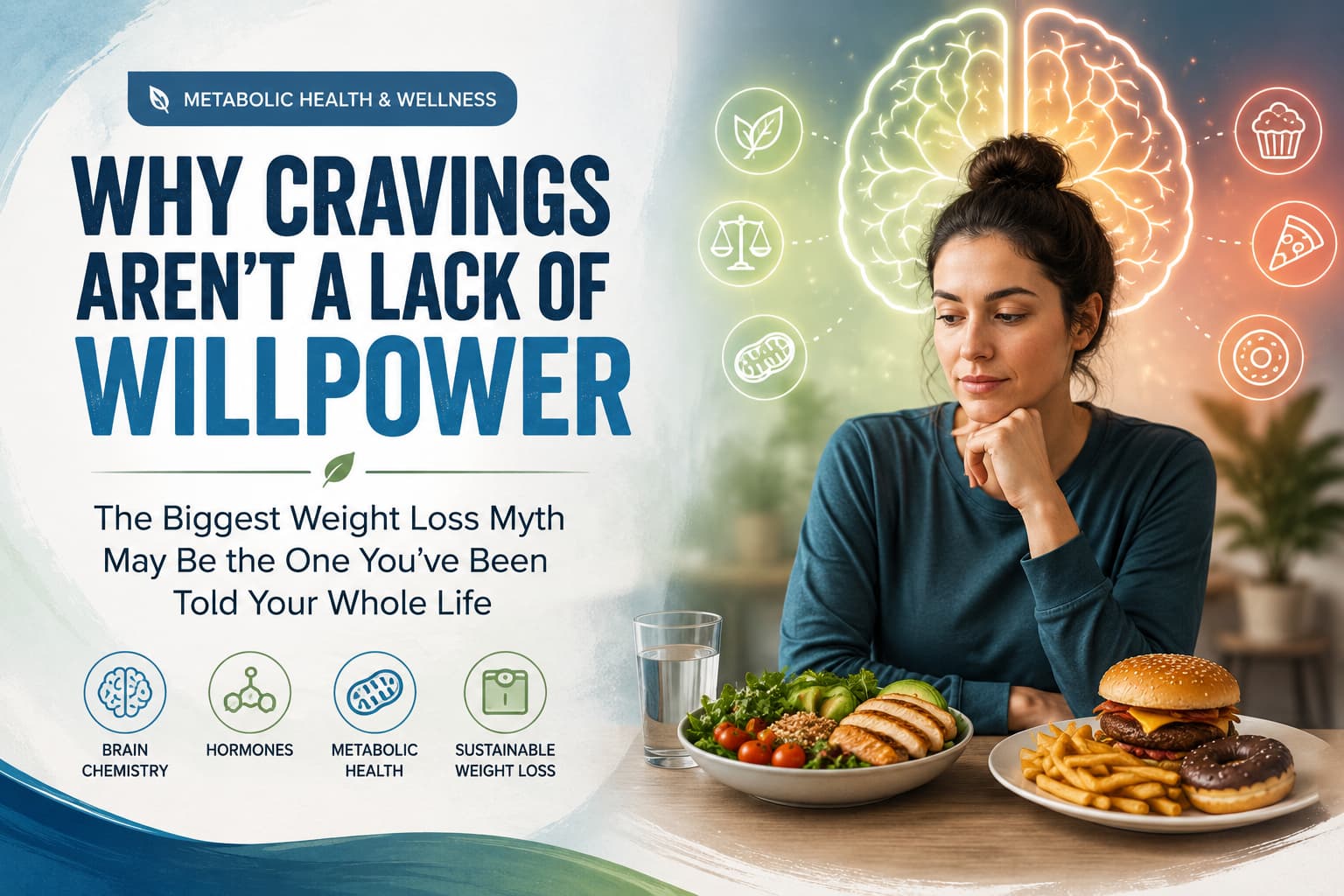
Why Cravings Aren't a Lack of Willpower
The Biggest Weight Loss Myth May Be the One You've Been Told Your Whole Life
How many times have people struggling with weight heard the advice?
- Just have self-control.
- Stop eating junk food.
- You need discipline.
- Try harder.
For years millions of people have blamed themselves for cravings they couldn't control. Every late-night snack, every drive-thru visit and every time they reached for food when they weren't physically hungry added to their frustration.
The assumption was always the same: the problem must be willpower. What if cravings relate less to character than most people think? What if many cravings are driven by biology, hormones, brain chemistry and metabolic health?
Modern obesity medicine is showing something. Many people are not failing because they lack discipline. They are struggling because their bodies send signals that make cravings incredibly hard to ignore. Understanding these signals may be crucial for weight loss.
Your Brain Was Designed to Keep You
Thousands of years ago food wasn't always available. The brain evolved survival mechanisms to seek food whenever possible. These systems helped humans survive famine. Today those same systems operate in our modern environment.
Processed foods are everywhere. Sugary foods activate reward pathways. Stress is higher than ever. Sleep is often lacking. Modern lifestyles usually contribute to metabolic dysfunction. The result? The brain may keep seeking food even when the body has stored energy. This is why it's hard to ignore food.
Why Cravings Feel Powerful
Many people think cravings start in the stomach. However, many cravings begin in the brain. Several areas of the brain help control reward, motivation, pleasure, appetite, food-seeking behavior and emotional responses. When these pathways activate, cravings can feel overwhelmingly intense.
This isn't weakness. It's neurobiology. Your brain responds to signals that were originally meant for survival. The challenge is that today's environment constantly stimulates those pathways. That's why it's hard to control cravings.
The Hidden Role of Insulin Resistance
One major driver of cravings is insulin resistance. When cells become less responsive to insulin, the body often compensates by producing more. This can lead to blood sugar fluctuations and appetite regulation issues.
Many people notice symptoms such as:
- Intense hunger
- Cravings for sweets
- Cravings for carbohydrates
- Energy crashes
- Difficulty feeling satisfied
- Increased belly fat
- Weight gain despite effort
Many people experiencing these symptoms blame themselves. What they don't realize is that their metabolism might be influencing their behavior. This is why improving health can often reduce cravings more effectively than merely trying to resist them. By understanding insulin resistance, people can take control of their health.
Why Emotional Eating Isn't Just About Emotions
Emotional eating is often viewed as purely psychological, but the reality is more complex. Stress hormones like cortisol can affect hunger signals. Poor sleep can change appetite-regulating hormones. Blood sugar instability can trigger cravings.
In short, emotional eating is influenced by biology as much as by emotions. This distinction matters. People stop blaming themselves when they understand what's happening beneath the surface. They realize that emotional eating is not just about emotions.
The Food Noise Connection
Many people who struggle with cravings also deal with something called food noise. Food noise refers to the constant thoughts about food throughout the day. For some, food becomes a background conversation that never stops.
The tiring reality is that many people live with food noise for years without realizing others don't experience it the same way. This is one reason cravings can feel overwhelming. The brain receives signals that continuously pull attention back to food. Food noise is a very real thing.
How GLP-1 and GIP Therapies Are Changing the Conversation
One major development in obesity medicine is the rise of GLP-1 and GIP therapies. Treatments like Tirzepatide work differently than traditional weight loss methods because they target key pathways involved in appetite regulation, satiety, blood sugar control and metabolic health.
Many patients describe a massive shift after starting treatment. The cravings become quieter. The constant negotiation around food begins to fade. Meals become more satisfying. Portion control feels more natural. Food no longer dominates every decision. This is a game-changer for people struggling with weight.
More Choices for Patients Than Ever Before
A common concern for people is the fear of injections. Healthcare is changing rapidly. Treatment options are expanding. Today, depending on provider recommendations and personal circumstances, patients may have access to traditional therapies as well as newer alternatives like weekly sprays and oral formulations designed to help with appetite control, metabolic health and weight management goals.
Having options allows patients to choose an approach that suits their lifestyle and comfort level. Patients have more choices than ever before.
Confidence Grows When Biology Starts Working With You
One overlooked benefit of improved metabolic health is confidence. People often think confidence comes after weight loss. In reality, it can return much earlier.
It begins when cravings no longer feel impossible. It grows when food stops controlling every thought. It strengthens when making healthy choices becomes easier.
Many patients discover that the struggle they blamed on themselves for years was never a character flaw. It was biology asking for support. When biology starts working with you, confidence grows.
Healthcare Should Be Simple
At Leanefy, helping patients with their health goes beyond weight loss and metabolic wellness. Life can be unpredictable. Whether dealing with a sinus infection, urinary tract infection (UTI), pink eye, nausea, skin issues or other common health matters, access to care should be easy and convenient.
Rain, snow or sunshine, patients can connect with providers from home while also exploring personalized options designed to support long-term health and wellness goals. Healthcare should be simple.
Final Thoughts
If you've spent years believing your cravings were due to a lack of willpower, it may be time to rethink that belief. Cravings often relate to hormones, metabolism, insulin resistance, brain signaling, appetite regulation, sleep, stress and overall health.
The goal isn't to be stronger than your biology. The goal is to understand it. When the body and brain work together, healthy choices often become less of a struggle and more of a natural part of life. That's where lasting change begins.
